

Introduction
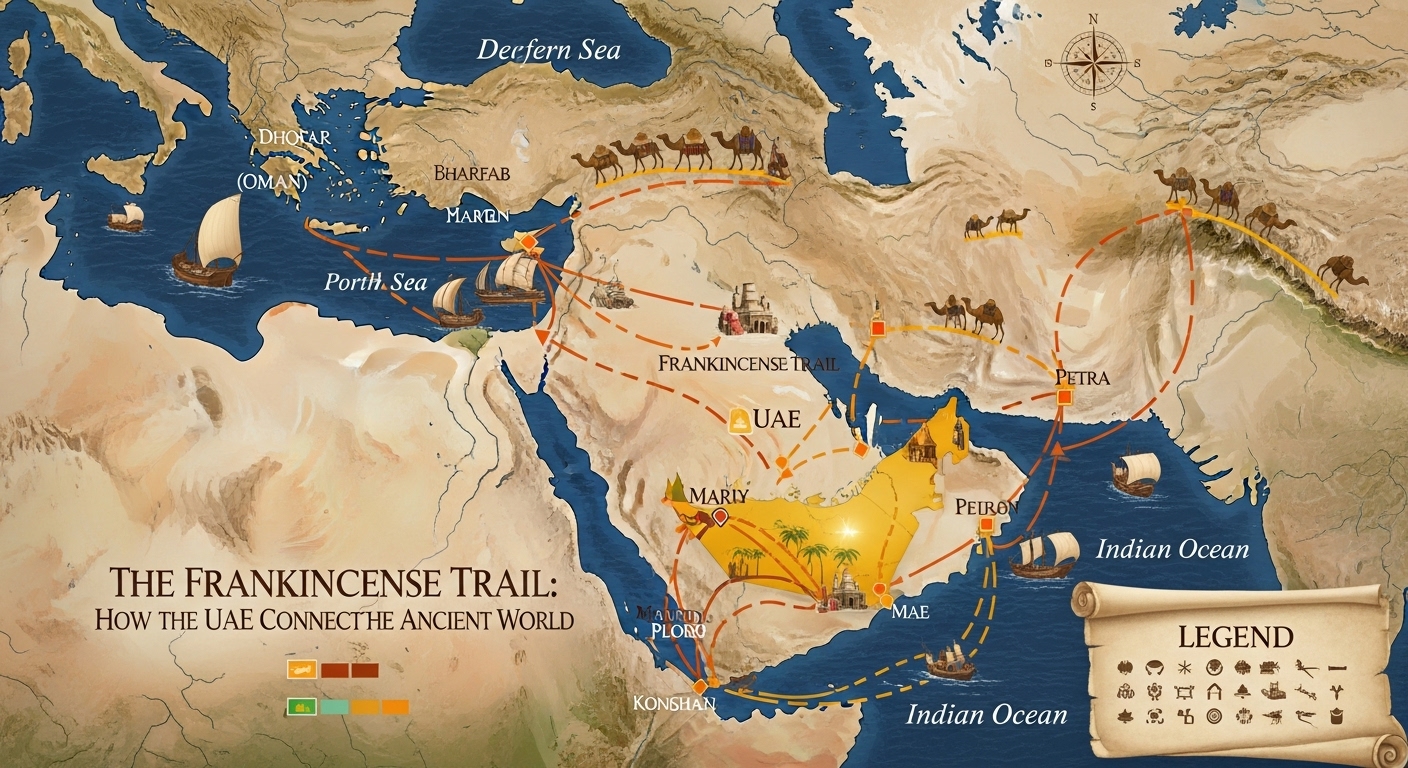
The frankincense trade, one of the most lucrative commercial networks of the ancient world, relied heavily on routes passing through what is now the UAE. This aromatic resin, prized for religious ceremonies and medicinal purposes, connected the region to global markets and brought wealth and cultural influence for centuries.
History
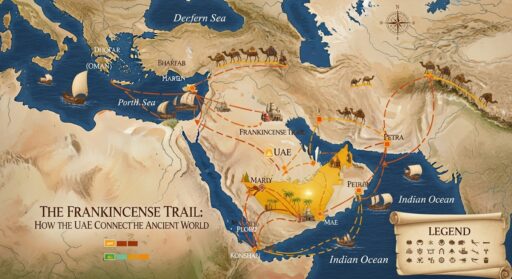
From approximately 800 BCE to 600 CE, frankincense from Dhofar (modern Oman) and Somalia traveled through the UAE via both land and sea routes. The inland center of Mleiha became particularly wealthy as a frankincense trading hub, controlling the distribution to markets in Mesopotamia, the Mediterranean, and beyond. The trade declined with the fall of the Roman Empire and the rise of alternative trade routes.
Key Features
The frankincense trade involved:
- Caravan Routes: Overland paths through the desert protected by tribal agreements
- Maritime Transport: Sea routes utilizing the UAE’s natural harbors
- Trading Cities: Urban centers providing security, storage, and market facilities
- Value Addition: Processing and packaging of raw frankincense for different markets
Cultural Significance
The frankincense trade embedded commercial sophistication and international networking into the region’s cultural DNA. It established the UAE as a place where luxury goods and high-value commodities were traded, setting a precedent for later specialization in pearls and ultimately modern luxury markets. The wealth generated supported the development of complex societies and political structures.
Modern Relevance
The legacy of the frankincense trade is visible in the UAE’s continued focus on high-value commerce and luxury markets. The success of Dubai’s Gold Souk and the development of luxury retail destinations like The Dubai Mall continue this historical pattern. The strategic thinking about trade routes and market positioning developed during the frankincense era informs contemporary logistics and supply chain management.
Conclusion
The frankincense trail established the UAE’s enduring role as a connector of markets and civilizations. This ancient commercial heritage demonstrates how geographic position, combined with commercial intelligence, can create lasting economic advantage across changing historical contexts.