

Introduction
Long before its modern emergence as a global trading hub, the territory of the present-day UAE served as a crucial crossroads in the ancient Indian Ocean trade network. Its strategic location between Mesopotamia, the Indus Valley, and Africa positioned it as a vital link in the exchange of goods, ideas, and cultures that shaped early civilizations.
History
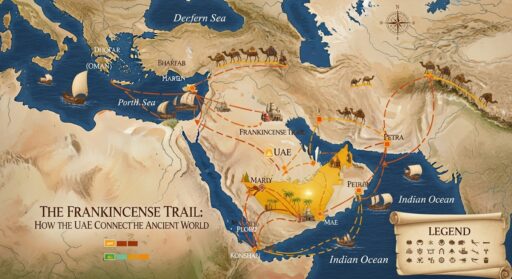
Archaeological evidence reveals maritime trade connections dating back to the Umm an-Nar period (2600-2000 BCE), with finds of Mesopotamian pottery and Indus Valley seals at UAE sites. The region’s prominence grew during the Wadi Suq and Iron Age periods, becoming particularly important during the heyday of the frankincense trade. By the pre-Islamic era, ports like Mleiha and Ed-Dur were thriving commercial centers connecting the Mediterranean world with South Asia.
Key Features
The ancient trade network featured several key elements:
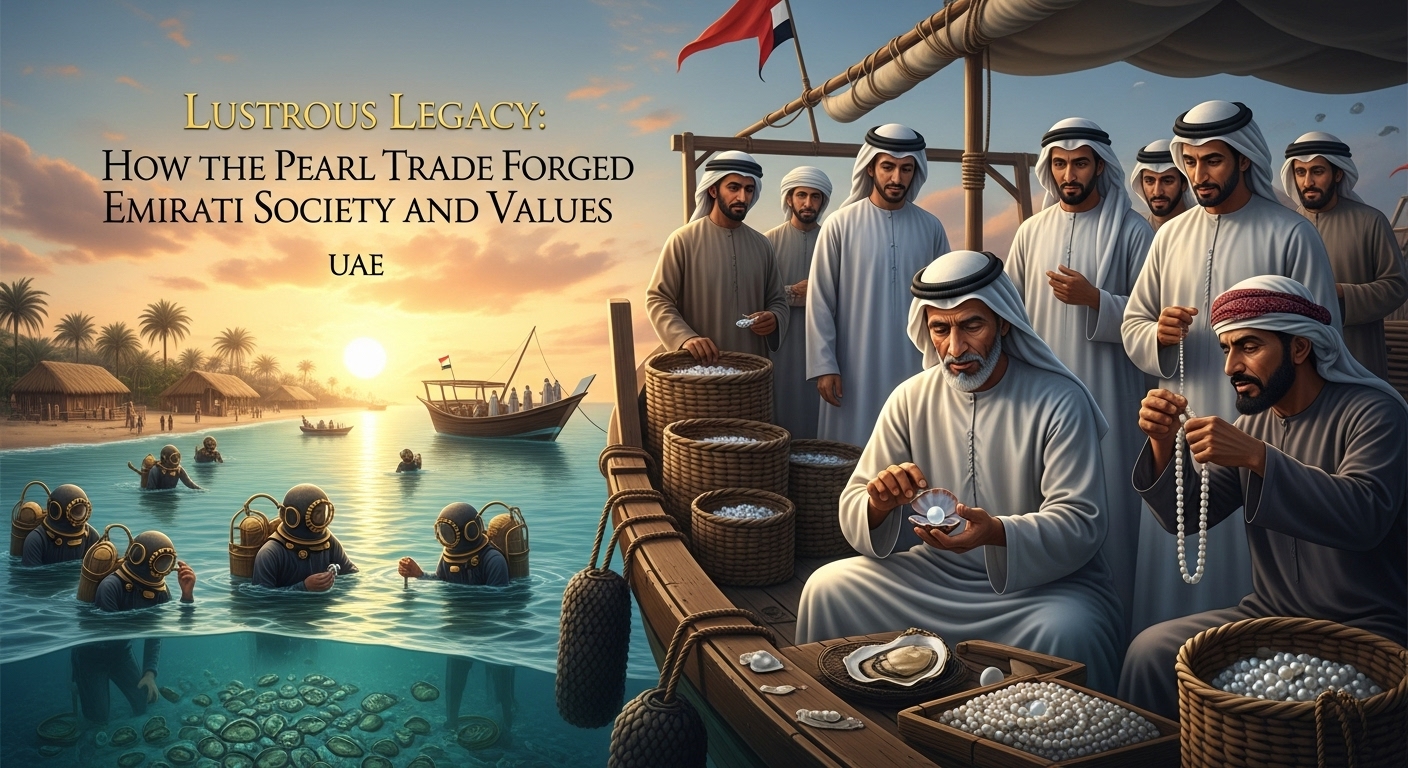
- Commodity Exchange: Copper from the Hajar Mountains, pearls from the Gulf, dates and dried fish were traded for luxury goods, timber, and foodstuffs
- Maritime Technology: Advanced dhow-building techniques enabled long-distance voyages
- Navigation Skills: Mastery of monsoon winds and celestial navigation
- Trading Centers: Seasonal markets and permanent ports facilitating exchange
Cultural Significance
This ancient trade role established patterns of openness and cultural exchange that continue to characterize the UAE today. The region developed as a multicultural space where different civilizations interacted, creating a tradition of tolerance and adaptability. The commercial instincts and global perspective nurtured through centuries of trade provided the foundation for the UAE’s modern economic success.
Modern Relevance
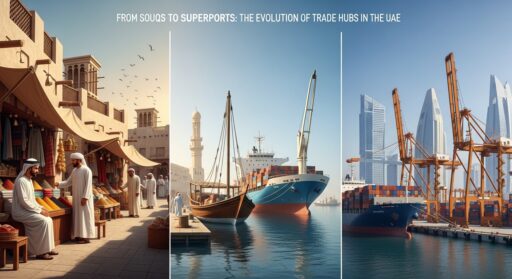
The UAE’s contemporary position as a global logistics and trade hub represents the reactivation of its ancient role on a larger scale. Modern ports like Jebel Ali and Khalifa Port continue the legacy of ancient trading centers, while free zones echo the historic function of trading entrepôts. Understanding this deep history of commerce helps explain the UAE’s natural advantage in global trade.
Conclusion
The UAE’s ancient role in Indian Ocean trade demonstrates that its current global commercial significance is not an innovation but a restoration of its historical position. This long perspective reveals the continuity of strategic geographic advantage and commercial acumen that has characterized the region for millennia.